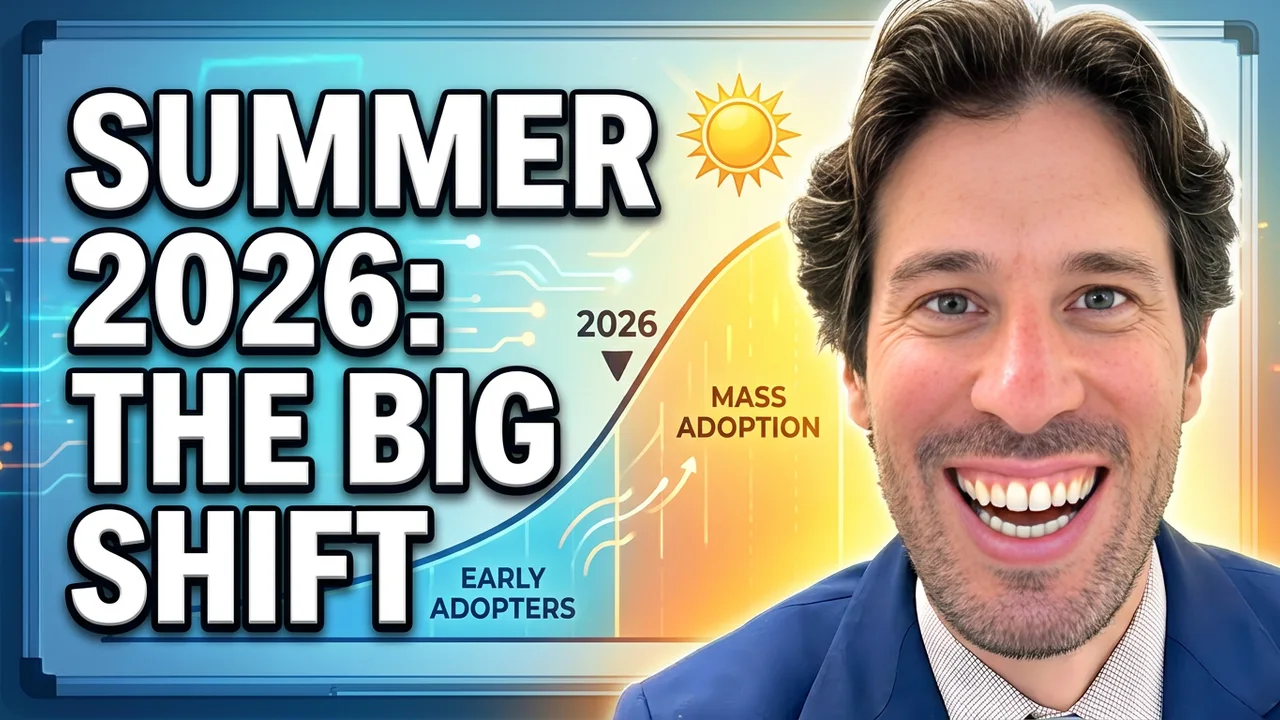
What makes summer 2026 the most important window for individual AI builders?
On Day 321 of building in public, I replaced what I estimate was $50,000 worth of Salesforce engineering in a single session — building two functional apps on my Apple Mac Studio that I had previously paid contractors to build over several years. That figure is my own running tally of contractor invoices paid over several years to customize one CRM for my real estate brokerage. Summer 2026 is the last low-friction entry point before AI development hits mass adoption — and I believe that window closes by 2027.
That is not a hypothetical. One of those apps had a recurring subscription fee attached to it. The other was a one-time purchase. I asked an AI to clone the core functionality, customize it to my workflow, and deploy it to my own machine. Done. I own the data. I own the code. Nobody else's terms of service applies.
At [00:06] I said: "today I built two apps that were software that I would have paid money for, one time fee, and one was a recurring fee. And I said, Can you build this and clone it and put it on my Mac Studio so I own it? Yes, I can." — that exchange captures what I experienced in my own workflow: the cost of building dropped below the cost of subscribing, at least for the specific tools I was paying for. I cannot claim that holds for every use case or every category of SaaS, but it held for mine, and it is the basis for everything I am saying in this session.
What is vibe-code, and how do you use it to build apps this summer?
Vibe-coding is AI-assisted development where you describe what you want in plain language and the AI writes the code. No syntax memorization required. No prior engineering background required. You are the architect; the AI is the implementer.
What vibe-code is:
- A workflow where you describe a feature or app in plain English and an AI model generates working code
- An alternative to hiring developers or buying SaaS subscriptions for functionality you can own outright
- A skill loop — the more clearly you learn to describe what you want, the faster and more accurately the AI builds it
- Not magic: the output still needs to be tested, iterated on, and deployed, but the barrier to starting is close to zero
Steps to build your first app with AI this summer:
- Pick one recurring SaaS tool you currently pay for and write down the three or four things you actually use it for — most tools are 80% unused
- Open an AI assistant and describe those core features in plain language, as if you were explaining it to a contractor
- Ask it to build a local version you can run on your own machine — for most personal and small-business apps, consumer hardware like Apple silicon is enough
- Test the output against your real workflow, not a hypothetical one; note what is missing and describe the gap back to the AI
- Iterate in short sessions rather than trying to build everything at once — two focused hours beats one unfocused weekend
- Once it works for you, ask whether a neighbor, a local restaurant, or a community group would pay a small monthly fee for access to the same tool; that is the monetization path
The whiteboard examples I ran through — to-do lists, CRM, calendar, push-notification system, community forum — are all apps that exist as paid SaaS products today. Every one of them is buildable this summer with this workflow.
How does the technology adoption curve explain what is happening right now?
The technology adoption life cycle is the S-curve model describing how innovations spread from early experimenters through to mass-market users — and by my own calculations, I estimate we are sitting at approximately 2–3% penetration on individual AI-assisted building right now. That is my read of where we are on the curve, not a figure from a published study.
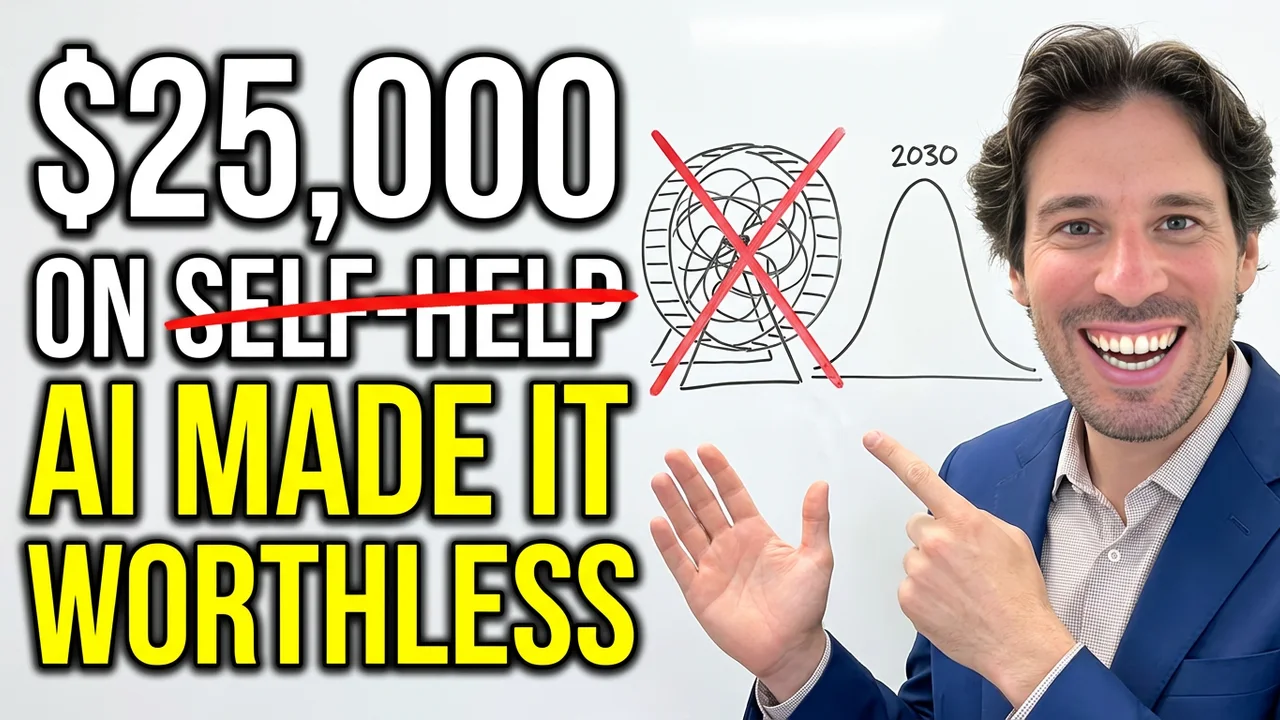
I drew this out on the whiteboard. The technology adoption life cycle on Wikipedia shows the familiar bell curve: innovators, early adopters, early majority, late majority, laggards. My projection is that mass adoption — the point where AI-assisted development is as ordinary as having a smartphone — hits around 2030. That is when automation and robotics converge with software, and the S&P 500 looks nothing like it does today.
You might also like

The people who wait until 2030 to start learning are the late adopters. They will be in the thick of it with no runway, no reps, and no portfolio. That is the position I am trying to help people avoid.
Why did I spend $50,000 on Salesforce engineers before I figured this out?
Before I started building with AI, I ran a customized version of Salesforce CRM platform. I spent what I estimate was around $50,000 on engineers and coders just to get a version of Salesforce that worked the way my real estate brokerage needed it to work — this is my own running tally of contractor invoices and hourly fees paid over several years of brokerage operations, not a figure from an independent audit. In my case, that level of spend became unnecessary once I could describe the features I actually needed and have AI generate working code directly — though I want to be clear that this is my own experience with my own specific workflow, not a universal claim about what AI can or cannot do for every CRM use case.
Before Salesforce, I was buying PHP scripts from CodeCanon — somewhere between 60 and 70 scripts, some priced up to $100 each. By my own math on the whiteboard — calculated from the actual scripts I purchased and what I paid for each — at an average of roughly $30–$50 per script across that volume, the script spend alone comes to somewhere between $2,000 and $3,000; that is my own running tally of what I spent, not a figure from an independent source, and I acknowledge the per-script average is an estimate across a range of prices. That is before factoring in hosting fees on someone else's server and hiring someone to install each script individually. Every layer of that stack was a dependency I did not own.
The contrast with today is stark. I am 17 years into real estate — licensed as an agent in 2009, became a broker owner in 2010, survived the 2009 financial crisis, survived COVID in New York City. None of that prepared me for how fast this particular cost structure collapsed.
What does the future workforce actually look like, and where do AI builders fit?
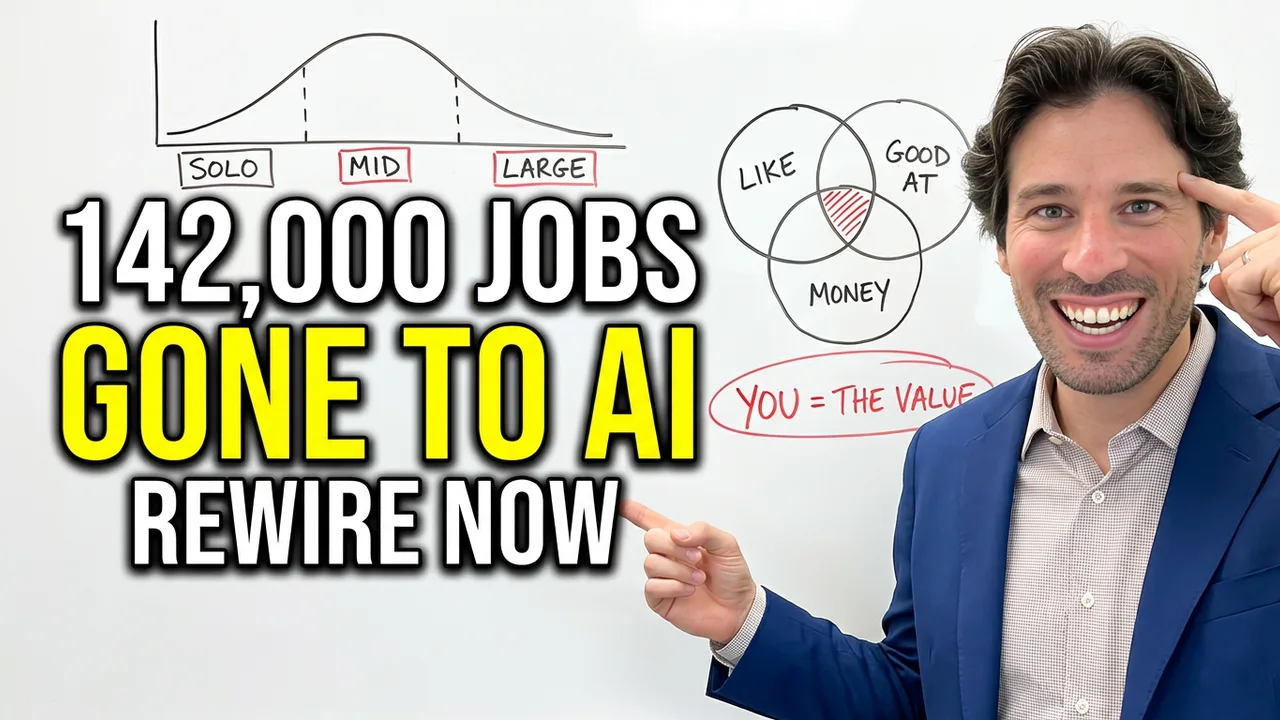
I sketched out 3 broad categories on the whiteboard, and the math only adds to 90% on purpose.
| Worker Category | Approximate Share | Description |
|---|---|---|
| Fortune 500 / Fortune 1000 employees | ~30% | Traditional corporate employment, large organizations |
| Mid-tier companies (roughly 500 employees and under) | ~30% | Small-to-medium businesses, trades, local services |
| Solopreneurs (under 50 people) | ~30% | Restaurateurs, cleaners, seamstresses, local operators |
| Net-new creators | ~10% | People building things they had no idea they would build |
That last 10% is the category I am putting myself in. Seventeen years in real estate, and I am now building apps, community platforms, and local software tools — none of which I would have predicted in 2019. The 10% are not necessarily the most technically skilled. They are the ones who started experimenting early enough to have reps when the wave arrived.
How does social media creation parallel the AI building opportunity right now?
The parallel I keep coming back to is the 2015–2018 YouTube window. The people who figured out the algorithm during that period — who niched down hard, posted consistently, and treated it like a craft — built audiences that still compound today. From what I observed on stream, social media creation feels like a roughly 97/3 split — my sense is that about 3% of creators capture the overwhelming majority of all views, likes, comments, and clicks. I cannot point you to a single published study that pins those numbers precisely; it is my own read of the landscape based on years of watching creator analytics play out. The directional point is the one I stand behind. The same early-mover logic applies to what vibe-coding can actually earn you — the gap between early builders and late arrivals is already measurable.
AI-assisted building is in the same early phase that social media creation was in around 2015. The niche-down logic applies directly. I am not trying to compete with data centers or enterprise AI infrastructure. I am building a triathlon coach app for my own use. I am building a local calendar and CRM that a neighborhood mom's group could pay $5 or $10 a month to access — safer than Facebook, owned by someone in the community, not dependent on a platform's terms of service.
The person who becomes the go-to local builder — the one who helps restaurants replace Open Table fees, who builds the sports league coordinator app, who runs the local government database — that person does not need to be a software engineer. They need to have started experimenting in summer 2026.
Frequently Asked Questions
What is vibe-code?
Vibe-code, or vibe-coding, is the practice of building software by describing what you want in plain language and letting an AI model generate the actual code. You do not need to know a programming language to start. What you need is the ability to describe a problem clearly, test what the AI produces against your real workflow, and iterate. The term captures the shift from "write the syntax yourself" to "articulate the outcome you need." My own framing on the whiteboard was that I described PHP as "a coding language, I guess — that's how bad I am when it comes to that." The point is that AI-assisted development tools handle the syntax.
How much does AI-enabled solo development cost?
By my own experience, the cost of building useful software with AI has dropped to roughly the price of whatever AI subscription or hardware you already own. I replaced two paid tools — one with a recurring subscription fee, one a one-time purchase — in a single session, running both on my Mac Studio. Before this era, I spent what I estimate was around $50,000 on engineers just to customize one CRM for my brokerage — that figure is my own running tally of contractor invoices and hourly fees paid over several years of brokerage operations, not a number from an independent audit. Before that I spent somewhere between $2,000 and $3,000 on PHP scripts — my own math on 60 to 70 scripts at an average of roughly $30–$50 each, calculated from what I actually paid across that range of purchases, not a figure from an independent source — plus hosting and installation fees on top. The cost structure I described on the whiteboard is: describe the feature, the AI generates the code, you run it locally on hardware you own. No recurring subscription. No external server. No one else's terms of service. I cannot tell you the exact dollar figure for every use case, but the directional shift — from five-figure engineering spend to near-zero — is what I observed firsthand in my own brokerage context.
When does the 2026 AI window close?
My argument on the whiteboard is that the low-friction entry point closes around 2027, not because building becomes impossible but because the competitive advantage of early reps disappears. At [00:08] I said the situation in "six to 12 months from now when it's summer 2027" will be unrecognizable compared to today. The people who have a year of building experience by then will have a compounding advantage over those just starting. My broader projection puts mass adoption — the point where AI-assisted development is as ordinary as having a smartphone — at around 2030. That is the late-majority phase on the technology adoption curve. Anyone waiting until then is arriving with no runway, no portfolio, and no reps. The window I am describing is not permanent. It is the same kind of window that existed on YouTube between 2015 and 2018, and it does not stay open.
What can I replace a SaaS subscription with using AI in 2026?
Start by listing the three or four features of a tool you actually use — most SaaS products are 80% unused by any given customer. Describe those features to an AI assistant and ask it to build a local version. Run it on your own machine. You own the data, you own the code, and no subscription renewal applies. I did this in a single session with two different tools I had been paying for. The workflow is: describe → generate → test on your real data → iterate. For a closer look at how I approached replacing enterprise CRM tools specifically, see how I replaced Salesforce with Claude.
Do I need a coding background to build apps with AI assistance?
No formal coding background is required. My own framing on the whiteboard was that I described PHP as "a coding language, I guess — that's how bad I am when it comes to that." The point is that AI-assisted development tools handle the syntax. What matters is being able to describe what you want clearly and iterate on the output.
What hardware do I actually need to run apps locally?
I run my locally deployed apps on an Apple Mac Studio. I do not specify the exact chip configuration in this session, but the core argument is that consumer-grade Apple silicon is sufficient to host personal and small-business applications without paying for external servers or cloud subscriptions.
Is it legal to clone the functionality of existing software?
My framing is that the AI builds from my descriptions, not from the original code. The output is customized to my workflow and does not use the original developer's codebase. That said, intellectual property questions around AI-generated software are still evolving, and anyone building for commercial use should consult a qualified attorney before distributing.
What kinds of apps make sense to build first?
My whiteboard examples include: a to-do list, a triathlon coaching app, a Google Docs-style editor, a Google Calendar-style scheduler, a CRM, a community forum, and a push-notification system for birthdays. The common thread is replacing a recurring SaaS subscription with something you own and can customize.
What does AI-assisted development mean for solo developers specifically in 2026?
For solo developers and non-technical founders, 2026 is the year the barrier to entry effectively disappears. The skills that previously required years of engineering training — writing backend logic, setting up databases, wiring APIs — can now be described in plain language and executed by an AI. The implication is that the bottleneck shifts from technical ability to clarity of thinking: can you describe the problem well enough for the AI to solve it? That is a skill anyone can develop, and the people building those reps right now will have a compounding advantage over anyone who waits. I estimate we are at roughly 2–3% penetration on individual AI-assisted building — that is my own read of where we are on the technology adoption curve, not a figure from a published study. The opportunity for solo developers is exactly that gap between where adoption is today and where it will be by 2027.
<script type="application/ld+json"> { "@context": "https://schema.org", "@type": "FAQPage", "mainEntity": [ { "@type": "Question", "name": "When does the 2026 AI on-ramp close?", "acceptedAnswer": { "@type": "Answer", "text": "According to Charles Botensten, the low-friction entry point closes around 2027 — not because building becomes impossible but because the competitive advantage of early reps disappears. His projection puts mass adoption at around 2030. Anyone starting then arrives with no runway, no portfolio, and no reps." } }, { "@type": "Question", "name": "How much can a solo developer save by building with AI instead of buying SaaS?", "acceptedAnswer": { "@type": "Answer", "text": "Charles Botensten estimates the cost dropped from roughly $50,000 in engineering fees (his own running tally of contractor invoices and hourly fees paid over several years to customize one CRM for his brokerage, not a figure from an independent audit) and $2,000–$3,000 in PHP scripts — his own math on 60 to 70 scripts at an average of roughly $30–$50 each, calculated from what he actually paid across that range of purchases and not a figure from an independent source, before hosting and installation fees — to approximately the price of whatever AI subscription or hardware you already own. He replaced two paid tools in a single session running locally on his Mac Studio. He notes this reflects his own brokerage experience and is not a universal claim for every use case." } }, { "@type": "Question", "name": "Do I need a coding background to build apps with AI assistance?", "acceptedAnswer": { "@type": "Answer", "text": "No formal coding background is required. Charles Botensten describes his own relationship with PHP as 'a coding language, I guess — that's how bad I am when it comes to that.' AI-assisted development tools handle the syntax; what matters is the ability to describe what you want clearly and iterate on the output." } }, { "@type": "Question", "name": "What is vibe-code?", "acceptedAnswer": { "@type": "Answer", "text": "Vibe-code, or vibe-coding, is the practice of building software by describing what you want in plain language and letting an AI model generate the actual code. No programming language knowledge is required to start. The term captures the shift from writing syntax yourself to articulating the outcome you need." } }, { "@type": "Question", "name": "What kinds of apps make sense to build first with AI?", "acceptedAnswer": { "@type": "Answer", "text": "Charles Botensten's whiteboard examples include: a to-do list, a triathlon coaching app, a Google Docs-style editor, a Google Calendar-style scheduler, a CRM, a community forum, and a push-notification system for birthdays. The common thread is replacing a recurring SaaS subscription with something you own and can customize." } }, { "@type": "Question", "name": "What hardware do I need to run locally built apps?", "acceptedAnswer": { "@type": "Answer", "text": "Charles Botensten runs his locally deployed apps on an Apple Mac Studio. His core argument is that consumer-grade Apple silicon is sufficient to host personal and small-business applications without paying for external servers or cloud subscriptions." } }, { "@type": "Question", "name": "What does AI-assisted development mean for solo developers in 2026?", "acceptedAnswer": { "@type": "Answer", "text": "For solo developers and non-technical founders, 2026 is the year the barrier to entry effectively disappears. Charles Botensten estimates roughly 2–3% penetration on individual AI-assisted building — his own read of the technology adoption curve, not a figure from a published study. The bottleneck shifts from technical ability to clarity of thinking: the ability to describe a problem well enough for the AI to solve it. People building those reps now will have a compounding advantage over anyone who waits until 2027 or later." } } ] } </script>
0 Comments
Log in to comment
Not a member yet? Join the community
Pick a meme
KlipyHave a great take?
Drop your email — we'll send a magic link so you can post it. No password.
Not a member of the community? Join today.
Join the community →