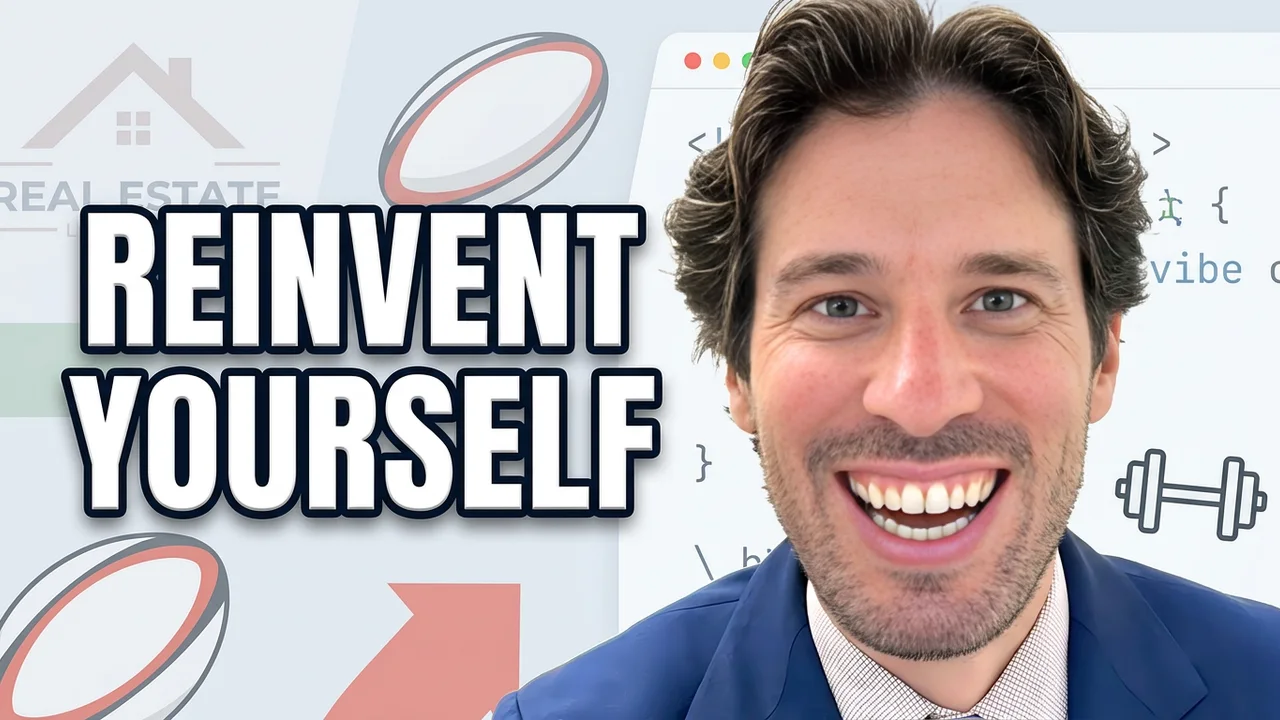
What actually happens when your professional identity disappears?
I am on Day 330 of building in public — and I have lived through at least four identity collapses before this one. The move is to initiate the shift yourself: deliberately, publicly, before the crisis arrives. That is the only lever you actually control. You cannot stop the displacement; you can decide to be the one who starts the transition.
The 4-phase social response to identity change is something I have lived through at least 4 times — and I am living it again right now, in June 2026, on Day 330 of building in public. The phases are not metaphorical. They run in sequence: rejection, then reluctant acceptance, then anger when you keep going, and finally — only if you refuse to retreat — celebration.
What I have watched across four identity transitions of my own is that most people never reach phase 4 — they get pulled back in phase 1. I cannot point you to a clinical study that confirms that ratio — I am drawing on what I have watched happen to people around me across those four transitions. But every time I have made a public shift, I have watched the majority of people who started the same move quietly return to the old identity before the social friction ended.
Why does AI make identity change urgent right now?
AI, automation, and robotics are not just changing job descriptions — that is my read on where this is heading, and I want to be honest about it. In my view, they are in the process of eliminating entire categories of work that people built their self-concept around. The World Economic Forum's Future of Jobs Report 2023 documents this direction across dozens of occupational categories — structural displacement, not just temporary disruption. The McKinsey Global Institute's research on the future of work has made a similar case over several years of analysis, pointing to automation's uneven impact across job categories and skill levels. I am not talking about a philosophical crisis. I mean someone who grew up being "the programmer," "the HR person," "the marketer," "the salesperson" — roles the World Economic Forum's Future of Jobs Report 2023 specifically identifies among the occupational categories facing structural decline, and that, in my experience watching this unfold, are shrinking structurally rather than contracting temporarily. I cannot hand you a single statistic that settles the question. What I can tell you is that the direction of the change feels clear enough to me that waiting for certainty before rethinking your identity is a losing strategy.
When the job disappears, the identity attached to it disappears with it. That is the crisis. And it is coming for a lot of people faster than they expect.
How did my own identity collapse at 22 — and what did I do?
I graduated college and walked into Oppenheimer Funds because my brother was in finance, my dad was an accountant, and most of my close friends were heading the same direction. New York City was finance. So I followed the current.
But I was 22 or 23, not making much money, and the identity markers I had carried through college — rugby, fraternity, being the guy who knew where to go — meant nothing in that city. The women I knew were dating 27- and 28-year-olds with houses in the Hamptons. I was invisible. My old identity was gone and the new one had not formed yet.
You might also like


At [0:03] I said: "my identity was shattered" — and that phrase is the honest description of what a career transition actually feels like before anyone calls it a pivot.
What did the 2008 financial crisis force me to decide?
The 2008 collapse hit New York later than the rest of the country, but it hit. Housing went down. Banks went down. The whole system needed a bailout. I left Oppenheimer Funds around March 2009 and moved into real estate — not because I had a plan, but because I knew I could not stay.
The immediate social response was phase 1, pure rejection. Friends asked how I would get clients when none of them were buying. I was 23. Nobody in my circle knew any real estate agents. The questions were fair, but the subtext was: get back in here, this is not who you are.
This is the mechanism the Australians and Scandinavians named tall poppy syndrome — the social reflex to cut down anyone who starts to stand above the group's shared baseline. It is not malice. It is group homeostasis. But it will end your momentum if you let it.
What are the 4 phases every identity shift moves through?
Every time I changed — finance to real estate, solo agent to broker-owner, active drinker to 5 days sober — the people around me ran the same sequence:
| Phase | Name | What the people around you say | What it actually is |
|---|---|---|---|
| 1 | Rejection | "You're not a real estate agent. You're 23. Nobody knows you." | Group homeostasis — pulling you back to the baseline |
| 2 | Reluctant acceptance | "Okay, yeah, you're doing the real estate thing. Fine." | Resistance drops, but enthusiasm is not there yet |
| 3 | Anger or withdrawal | "You're not coming out Friday nights anymore? Get back here." | The group realizes you are not returning |
| 4 | Celebration | "I always knew you were going to do something like this." | Only arrives if you never retreat to the old identity |
From what I have watched across my own transitions and the people around me: most never reach phase 4. One visible retreat to the old identity resets the clock to phase 1. I am attributing that observation to my own experience, not a study — but I have seen it consistently enough across four transitions that I treat it as load-bearing.
The pattern repeated when I launched Botensten Properties International around 2013 and 2014. The objections were identical in structure: Where's your office? Owners don't trust small companies. How are you going to handle objections? Phase 1 again, louder.
How does momentum interact with identity — and why did I lose it?
Momentum is not a metaphor. I went live on YouTube 5 days a week, same time, same format. Viewership climbed — 9 viewers, 10, 18, 20. Then I dropped off for a week. Everything collapsed back toward zero.
The social version of this is identical. If you retreat from your new identity — even once, visibly — the people around you reset their expectations. They go back to celebrating the old you. The new identity loses all accumulated credibility. Joe Dispenza's research on identity and personal reality — the framing I keep returning to — is that your identity becomes your personal reality. The moment you act like the old identity is still valid, it is.
Consistency is not a productivity tip here. It is the structural requirement for making it through phases 1 through 3.
Why does Claude Code feel like the identity I was always building toward?
In 2025 I found Claude Code official documentation and something clicked that I had not felt since I was 12 or 13 years old with my hands on a keyboard for the first time. I have since vibe-coded apps, websites, a CRM, a community, and an email list — most of it at a cost that would have been unthinkable even 5 years ago.
Solopreneurship has never been less expensive to start. The camera and microphone cost money. The video itself does not. That asymmetry is real, and it is the reason I believe this identity shift — unlike the ones driven by crisis — is one I am choosing with full awareness.
As of June 2026, I am working 3 active identity changes at once:
- Sobriety — 5 days in at the time of this recording
- Returning to the gym after years away from the triathlete I used to be
- Building consistently with AI tools, publicly, every day
The 2008 financial crisis forced my first real identity reset. This one I am initiating myself.
Frequently asked questions about AI, jobs, and identity change
What should someone do if they feel their job is at risk from AI? Start the identity shift before the crisis forces it. That is the core argument I am making in this video. I am not saying quit your job tomorrow. I am saying do not wait until the role disappears to start experimenting with who you are outside of it. The social phases I describe — rejection, reluctant acceptance, anger, celebration — take time to move through. The earlier you start, the more of that time you have before the external pressure arrives.

0 Comments
Log in to comment
Not a member yet? Join the community
Pick a meme
KlipyHave a great take?
Drop your email — we'll send a magic link so you can post it. No password.
Not a member of the community? Join today.
Join the community →